

…First Lady Urges Youths to Embrace Purposeful Living
…VC, NDLEA Advocate Drug-Free Campuses and Communities
By Our Correspondent

The First Lady of Lagos State, Dr. (Mrs.) Claudiana Ibijoke Sanwo-Olu, has reaffirmed the commitment of the Lagos State Government to combating drug abuse and illicit trafficking, urging young people to shun substance abuse and embrace purposeful living.
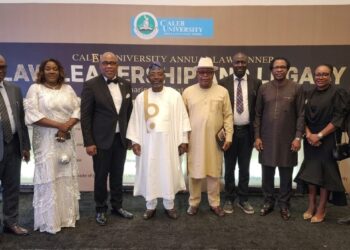
Dr. Sanwo-Olu made the call on Thursday at Caleb University, Imota, during the commemoration of the 2026 International Day Against Drug Abuse and Illicit Trafficking.
The event featured an awareness walk, advocacy programmes and a drama presentation led by the Vice-Chancellor of Caleb University, Professor Olalekan Asikhia, aimed at reinforcing the message against drug abuse among youths.
Speaking at the event, the First Lady described drug abuse as one of the greatest threats confronting young people and society today, noting that its consequences extend beyond individuals to families and communities.
The awareness campaign, organised by the Office of the First Lady of Lagos State in collaboration with Caleb University and other stakeholders, attracted students, academics, government officials, officers of the National Drug Law Enforcement Agency (NDLEA) and members of the public.
The programme was held in line with the United Nations International Day Against Drug Abuse and Illicit Trafficking, observed annually on June 26.
Addressing participants, Dr. Sanwo-Olu said the theme of this year’s celebration, “The World Drug Problem: Persisting Issues, New Challenges, Innovative Responses,” aptly reflects the realities confronting nations across the globe.
According to her, while drug abuse has remained a longstanding challenge, emerging trends and the proliferation of new psychoactive substances have created fresh concerns requiring innovative and collaborative solutions.
She warned that addiction adversely affects mental and physical health, academic performance, productivity, relationships and overall well-being.
“Drug abuse may offer temporary excitement, but it ultimately destroys dreams, health, education, careers and lives,” she said.
The First Lady urged students to become ambassadors against substance abuse by discouraging drug use among their peers and supporting individuals struggling with addiction.
She disclosed that her office has continued to partner with the NDLEA, relevant ministries, community leaders, market associations, local government authorities and non-governmental organisations to strengthen awareness and prevention programmes across Lagos State.
Highlighting previous interventions, Dr. Sanwo-Olu revealed that more than 3,000 participants joined a similar advocacy campaign at Lagos State University in 2025, resulting in the installation of an anti-drug mural and signpost on the campus.
She added that the campaign was subsequently extended to the University of Lagos before arriving at Caleb University, the first private university in Lagos State to host the initiative.
As part of efforts to sustain the campaign, the First Lady inaugurated the Caleb University War Against Drug Abuse (WADA) Club and decorated selected students as WADA Champions.
She also unveiled an anti-drug signpost within the institution to serve as a constant reminder of the dangers associated with substance abuse.
Calling on members of the public to remain vigilant, Dr. Sanwo-Olu urged residents to report suspicious drug-related activities, stressing that early intervention could save lives.
“My message is simple and clear: Say no to drug abuse and yes to life, purpose and a brighter future. Together, we can win this fight,” she stated.
Earlier in his welcome address, the Vice-Chancellor of Caleb University, Professor Olalekan Asikhia, expressed appreciation to the Office of the First Lady for partnering with the institution in the anti-drug advocacy campaign.
Professor Asikhia described drug abuse as a growing social menace that threatens the future of young people and undermines national development.
He noted that universities have a responsibility not only to provide academic excellence but also to serve as moral compasses and agents of positive societal transformation.
“The urgent need to confront the scourge of drug abuse transcends political, social and academic boundaries,” the Vice-Chancellor said.
He reiterated Caleb University’s commitment to maintaining a drug-free environment, promoting mental wellness and equipping students with the resilience needed to resist substance abuse.
The Vice-Chancellor also encouraged participants to actively engage in discussions and adopt practical measures that would contribute to a safer and healthier society.
Also speaking, the wife of the Lagos State Deputy Governor, Mrs. Oluremi Hamzat, underscored the importance of collective responsibility in addressing the global drug problem.
She warned that while drugs may appear to offer temporary relief from life’s pressures, they often result in devastating and long-lasting consequences.
Mrs. Hamzat urged students to remain focused on their education, embrace positive values and resist peer pressure and the lure of quick success.
She maintained that parents, schools, religious institutions, communities and governments must work together to raise a generation that is healthy, responsible and purpose-driven.
In a symbolic moment during the programme, students participated in an anti-drug pledge led by Mrs. Hamzat, committing themselves to rejecting substance abuse and contributing to a safer society.
Representatives of the NDLEA used the occasion to reaffirm the agency’s commitment to tackling drug abuse through prevention, advocacy, enforcement, rehabilitation and public enlightenment.
The agency reminded students that success in life does not require the use of illicit substances and urged them to become anti-drug advocates within their schools, homes and communities.
According to the NDLEA, the battle against substance abuse begins at home and requires the active involvement of parents, guardians, teachers, religious leaders and other stakeholders.
The agency further stressed that sustained awareness, early intervention and community support remain critical in reducing the prevalence of drug abuse among young people.
Participants at the event were also treated to expert presentations, advocacy activities and educational sessions highlighting the dangers of substance abuse and the benefits of a drug-free lifestyle.
Many students described the initiative as timely and impactful, noting that it would help young people make informed decisions and avoid harmful habits.
The event concluded with a renewed call for stronger partnerships among government agencies, educational institutions, families and communities to safeguard the future of Nigerian youths and build a society free from the devastating effects of drug abuse.