
•Mass killings, kidnappings and repeated attacks raise questions about the state’s capacity to protect vulnerable citizens
•Survivors face uncertainty as intelligence failures, inadequate responses and weak accountability deepen fears of renewed violence
By Kunle Osota

Olusoga Tunde Awosanya was a young Nigerian farmer with ambitions of building a successful agricultural business. After leaving the relative comfort of Lagos, he relocated to Benue State, attracted by its fertile soil and potential for large-scale crop production and livestock farming.
Benue, widely regarded as one of Nigeria’s agricultural hubs, offers considerable opportunities for farmers. Yet persistent attacks on farming communities, communal violence, land disputes and the activities of armed groups have made agricultural livelihoods increasingly vulnerable in parts of the state.
Like many others whose livelihoods depend on the land, Awosanya and other settlers in Yelewata faced the challenge of sustaining their businesses amid insecurity. Their reported experiences raise troubling questions about the safety of rural communities, the capacity of security agencies to respond to credible threats and the possibility of rebuilding lives after violence.
For some residents, the danger extends beyond living in an insecure community. They face threats directed at them personally, attacks on their homes, the loss of relatives and property, or fears that suspected perpetrators could pursue them even after they relocate.
The reported experiences of Lazarus Eugene, Adebayo Jeremiah, Anthony Ibiyemi, Adeolu Peter Roland and two other farmers associated with the Yelewata community illustrate the potentially devastating consequences of insecurity.
According to the account provided, the farmers attempted to protect their livelihoods and supplied information to security agencies. Rather than finding lasting security, however, some reportedly became victims of further violence.
Anthony Ibiyemi and Adeolu Peter Roland were reportedly killed by unidentified gunmen in Yenagoa, leaving their families devastated. Lazarus Eugene was allegedly abducted while travelling towards Benin in the Oka-Akoko area of Edo State.
His whereabouts remain unknown, and his family has yet to establish whether he is alive.
The account also indicates that other individuals who survived earlier incidents subsequently went missing. It underscore the fears of families who believe their relatives remain exposed to danger.
The circumstances raise a fundamental question: how effective are the institutions entrusted with protecting lives and property when people who report threats or seek assistance continue to fear for their safety?
The Nigerian Constitution places the security and welfare of the people among the primary purposes of government. Yet the persistence of mass killings, kidnappings, village raids and attacks on farming communities continues to test the capacity of public institutions to fulfil that responsibility.
The Nigeria Police Force remains the country’s principal civilian law-enforcement agency, responsible for preventing crime, investigating offences and enforcing the law. However, recurring attacks have raised concerns about intelligence gathering, emergency response, operational coordination and accountability.
The central issue is not merely whether security agencies exist, but whether people facing credible threats can obtain timely, practical and effective protection.
A Crisis Measured in Lives Lost
A report published by Amnesty International on May 28, 2025, highlighted the scale of Nigeria’s security crisis. The organisation reported that at least 10,217 people had been killed in attacks by gunmen across nine states during the two years following President Bola Tinubu’s inauguration in May 2023.
According to Amnesty International, Benue accounted for 6,896 deaths, while Plateau recorded at least 2,630.
Behind the statistics are communities struggling to recover from violence, families mourning loved ones and survivors uncertain whether they can safely return to their homes and farms.
Every major attack raises questions about whether authorities received advance warnings, whether security personnel responded promptly to distress calls and whether investigations resulted in arrests and prosecutions.
Where violence recurs without visible improvements in security, public confidence in the ability of the authorities to prevent further attacks may deteriorate.
The crisis is not confined to Nigeria’s Middle Belt. Armed criminal groups operating in parts of the North-West have carried out kidnappings, killings, robberies and raids, leaving residents fearful of travelling, farming or conducting ordinary business.
Human Rights Watch’s World Report 2026, which reviewed developments in 2025, cited figures from geopolitical research firm SBM Intelligence indicating that 2,938 people were kidnapped in the North-West between July 2024 and June 2025.
Zamfara recorded 1,203 reported abductions, followed by Kaduna with 629, Katsina with 566 and Sokoto with 358.
Although the nature and scale of insecurity vary across Nigeria’s six geopolitical zones, kidnapping and violent attacks have affected communities in several parts of the country.
Worried by the level of the dastard actions of Fulani herdsmen in the South West and the failure to get protected by the law enforcement agencies, Yoruba Nation activist Sunday Adeyemo, popularly known as Sunday Igboho, issued a fresh eviction warning to suspected kidnappers and criminal herders operating in the South West, urging them to leave immediately.
The warning was reportedly conveyed through an audio message by his spokesperson, Olayomi Koiki.
The reported directive comes amid renewed concerns over insecurity in parts of the South West, Nigeria where residents have accused suspected herders of kidnapping, killing and preventing farmers from accessing their farmlands.
An indigene of the affected communities in Oke Ogun told Newsmen that the alleged attacks had intensified, leaving farmers increasingly worried about their safety.
Igboho had, some weeks earlier, reportedly warned criminal herders to leave the area and indicated plans to establish local security groups to protect farmers against intimidation and attacks.
In the audio message, Koiki, speaking in Yoruba, said the warning was issued at about 6 p.m. on July 15, 2024, and was directed at Fulani people living in the forests of Oke Ogun who were allegedly involved in kidnapping and killings.
According to the message, Igboho intended to extend his activities to Kishi and other communities across Oke Ogun.
“All Fulani people living in the South West, particularly Oke Ogun, living inside the bushes there, who are kidnappers, that are killing the people, are immediately ordered to leave now,” Koiki said in the audio, attributing the directive to Igboho.
The message further stated that Igboho intended to visit the remaining communities in the area as part of his reported efforts to confront those accused of perpetrating criminal activities.
“All Fulanis should leave the bush in Oke Ogun. The forest does not belong to you. The land belongs to us,” the spokesperson said, relaying Igboho’s position.
The message also called on traditional rulers across Yorubaland to speak out if they were experiencing attacks allegedly linked to Fulani herders in their respective domains.
Koiki reportedly said Igboho was not seeking confrontation with state governors but was determined to drive out those responsible for attacks against residents of the Southwest.
The activist was also said to have indicated that his men would comb forests occupied by herders across Yorubaland after obtaining permission from traditional rulers in Ondo, Ogun, Ekiti and Osun states.
According to the audio message, preparations were underway for his men to enter forests in Oke Ogun and warn those accused of criminal activities to vacate the area.
The reported development has generated mixed reactions on social media, with some supporters praising Igboho for attempting to address insecurity, while others questioned his approach and argued that he was acting independently.
One social media user expressed support for the activist, saying residents needed someone to confront suspected criminal herders because, in the user’s view, state governors had failed to adequately address the situation.
Another commenter expressed interest in joining the Yoruba Nation movement in North America, citing concerns about insecurity in the Southwest.
The warning, as presented in the audio, was directed at individuals accused of kidnapping and other criminal activities, although its wording also referred broadly to Fulani people living in the forests.
When Threats Become Personal
Awosanya, Eugene and others experiences illustrate another dimension of insecurity: the difficulty of finding lasting safety when a person believes armed individuals are specifically interested in harming them.
According to the account of one of the victim’s experiences, he faced threats and intimidation that escalated into violent incidents affecting him and his family. He reportedly suffered the loss of relatives and property and feared individuals he believed were connected to the violence against him.
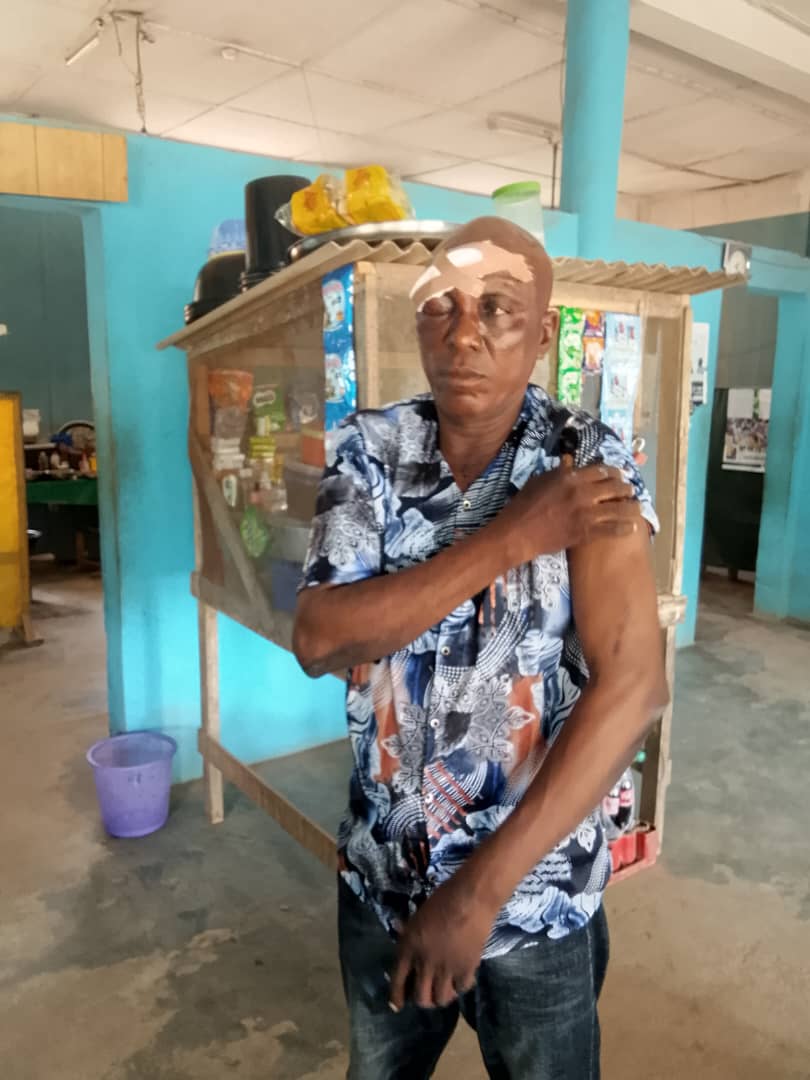
Narrating his ordeals from his hideout recently, one of the Yelewata victims, Adebayo Jeremiah, reported how armed men reportedly attacked his home.
He said on January 29, 2026, there was an attempted abduction and the ransacking of his home.
Having seen what happened to his colleagues, and for someone who has experienced an attack, the possibility of further violence on his life may no longer appear remote. Those that witnessed daily insecurity in Yelewata still goes about with the fear of renewed attacks.
Example is Awosanya and his colleagues whose concern is can relocating to other areas in Nigeria give them the peace they demand? The reverse may be the case.
In Nigeria today, no where is a peace haven, nowhere is safe. Many of these Fulani herdsmen have information about their victims. Example is the Orire School abduction. It was gathered that many of those who carried out the abduction came from Sokoto, Zamfara, Katsina States.Only few of them who are mainly Fulanis residents in Oyo State.
They were able to get their information through profiling by their Leaders. They made inquiries about their prey’s whereabouts, they therefore demonstrated an ability to obtain information about their victims movements.
So non State actors have the possibility of tracing their prey to anywhere in the country.
The Question of Police Protection
For people threatened by non-state actors, approaching the police does not automatically establish that effective protection was provided. Nor does the absence of a successful prosecution, there were series of prove that the authorities were unwilling or unable to help victims of insecurity.
Based on verifiable facts, the state on so many occasions was unwilling and unable to provide sufficient protection against non-state actors.
Very glaring situation was the inability to access in areas affected by armed conflict or where criminal groups exercise de facto control over territory. Individual circumstances may also affect access to effective protection.
Yelewata and the Cost of Insecurity
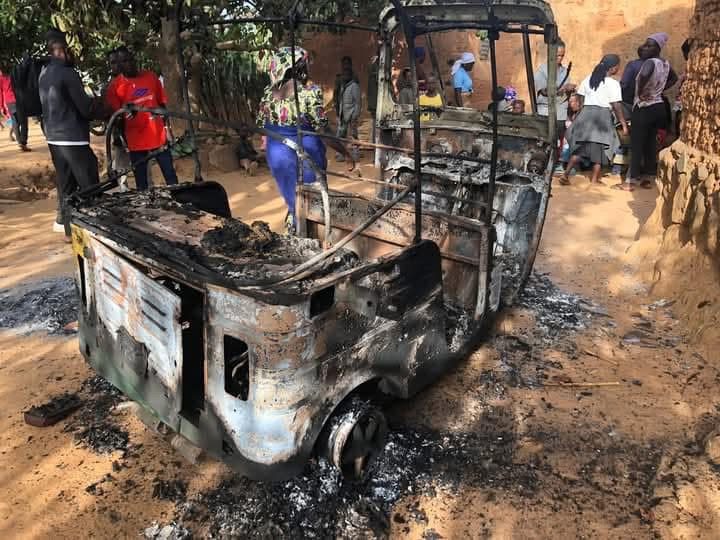
The consequences of insecurity were brought into sharp focus again on September 2025, when armed assailants attacked Yelewata, a farming community in Benue State.
The attack plunged the community into mourning and renewed concerns about the safety of residents who depend on their homes and farmland for survival.
Human Rights Watch reported that the attack killed 59 people, citing the state governor. The incident highlighted the vulnerability of farming communities and the devastating consequences of violence against civilians.
The organisation called on Nigerian authorities to strengthen security in vulnerable communities and establish an effective rapid-response system in collaboration with residents.
Security agencies must also be able to sustain their presence in vulnerable communities, investigate criminal networks and prevent armed groups from repeatedly attacking the same populations.
For Awosanya and others whose experiences are linked to Yelewata, the wider security crisis also raises a more personal concern: whether the authorities can protect individuals who believe they have been singled out for attack.
Human Rights Watch’s World Report 2026 raised concerns about the persistence of deadly attacks and accountability in Nigeria. Where information about investigations and prosecutions is limited, affected communities may struggle to determine whether perpetrators have been brought to justice or whether measures have been introduced to prevent further violence.
For victims who have previously sought police assistance, the absence of meaningful follow-up may deepen concerns about returning to the same environment.
Beyond Condemnations
The Nigerian government and security agencies must move beyond statements condemning attacks after lives have been lost.
Effective protection requires credible intelligence, prompt responses to distress calls, professional investigations, coordination among security agencies and local communities, protection for threatened complainants and witnesses, and transparent prosecution of those responsible.
For people who have survived attacks, protection must extend beyond the immediate aftermath. Threatened individuals may require assistance in assessing continuing risks, documenting incidents and accessing appropriate legal and security channels.
There is also a need for better communication between security agencies and vulnerable communities. Residents must have accessible channels through which to report threats, receive updates on complaints and obtain emergency assistance without fear of retaliation.
Where people have supplied information to the authorities, their safety should be taken seriously. Confidentiality, witness protection where available and appropriate risk assessments may be crucial to preventing those who assist investigations from becoming targets themselves.
When the Vulnerable Are Left Behind
When people report threats, lose loved ones, remain fearful despite efforts to seek assistance, the institutions responsible for their protection must provide answers. The credibility of the state depends not only on its capacity to respond to insecurity on a national scale, but also on whether it can protect the individual citizen who has nowhere else to turn.